
Cost to Replace a Roof in Augusta, ME: The 2026 Numbers
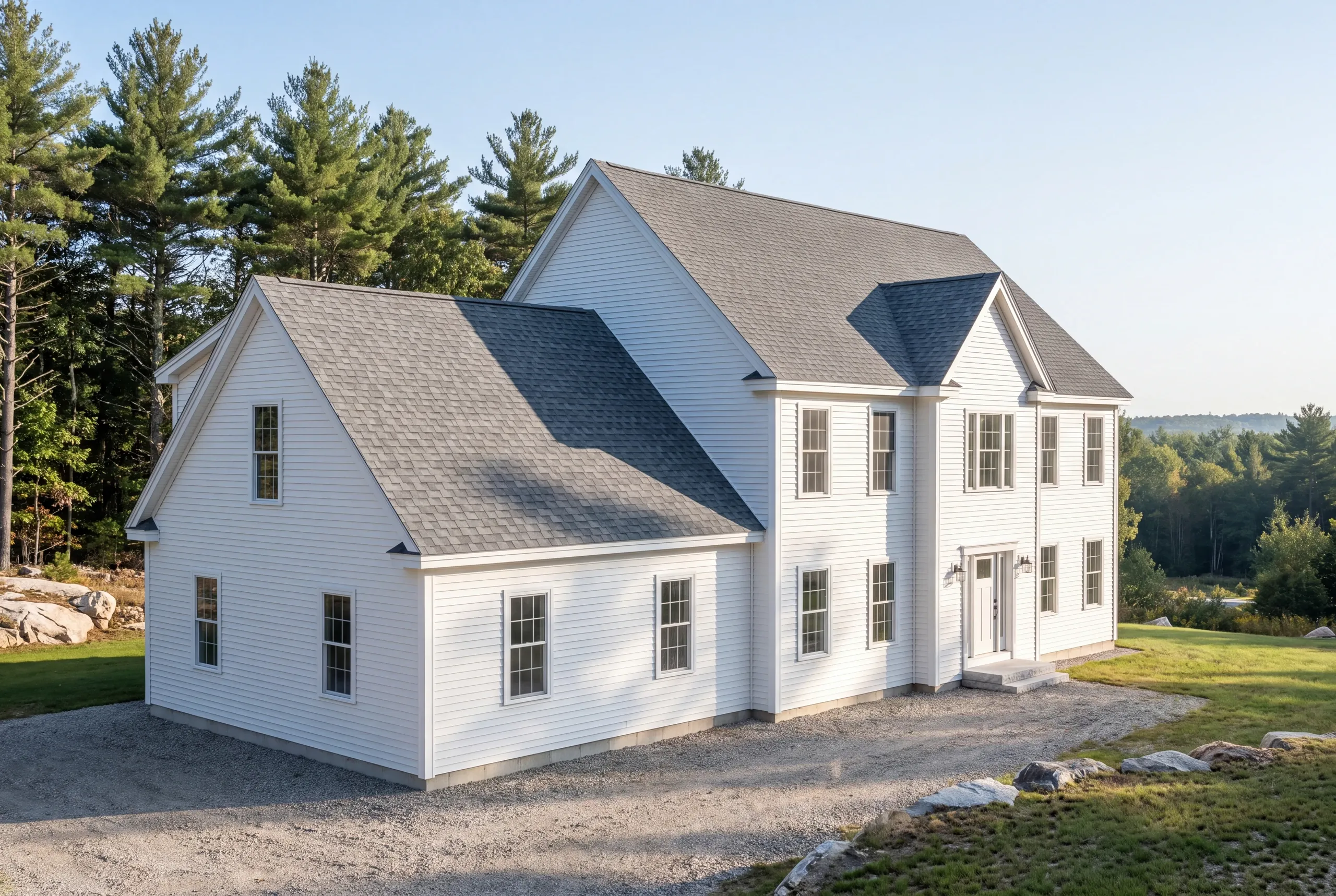
The cost to replace a roof in Augusta, ME runs $6.00 to $9.50 per square foot of roof for architectural asphalt, and $11.00 to $16.00 for standing seam metal.
Updated for 2026.
That is the answer. The rest of this guide explains how to turn those rates into a number for your house, and which four line items decide whether a low bid is a bargain or a problem.
The detailing behind those rates, ice barrier included, is on the roof replacement page.
Every figure here is a qualifying range built from hundreds of estimates. Your roof will land near a band rather than exactly on one.
The Rates
Every roof bid in Augusta starts from one of these four rates.
| Scope | Per square foot of roof | Per square |
|---|---|---|
| Architectural asphalt, one layer off, simple gable | $6.00 to $7.50 | $600 to $750 |
| Asphalt, cut-up roof: dormers, valleys, 8:12 or steeper, or two layers off | $7.50 to $9.50 | $750 to $950 |
| Exposed-fastener metal panel | $8.50 to $11.00 | $850 to $1,100 |
| Standing seam metal | $11.00 to $16.00 | $1,100 to $1,600 |
A square is 100 square feet of roof. It is how the trade prices and how most of the bids you collect will be written, so knowing the word makes three quotes comparable in about a minute.
Roof Area Is Not Floor Area
This is where most homeowner budgets go wrong before they start.
A 1,200 square foot footprint under an 8:12 pitch carries roughly 1,440 square feet of roof, before you count the overhangs. Pitch is a multiplier, and it is why two houses of the same size get different roof prices.
Maine's average roof runs about 1,650 square feet, roughly 16.5 squares.
Cost to Replace a Roof in Augusta, ME by Roof Size
Here are three common roof sizes across the three main roof types.
| Roof | Simple asphalt | Cut-up asphalt | Standing seam |
|---|---|---|---|
| 1,200 sq ft | $7,500 floor to $9,000 | $9,000 to $11,400 | $13,200 to $19,200 |
| 1,650 sq ft (Maine average) | $9,900 to $12,400 | $12,400 to $15,700 | $18,200 to $26,400 |
| 2,400 sq ft | $14,400 to $18,000 | $18,000 to $22,800 | $26,400 to $38,400 |
Read that table as the shape of the math, never as a quote. It is the rate multiplied out, and a real house has a chimney, a skylight, and a soft spot in the deck that the multiplication does not know about.
A full house replacement does not go below $7,500 regardless of size, because the dumpster, the staging, and the first crew day cost close to the same on a small roof as a large one.
The Six Things That Move the Number
1. Pitch. Steeper is more surface and more staging. Past 8:12 the crew is working on roof jacks and the day slows down.
2. How many layers come off. Two layers is double the disposal weight, and disposal is priced by weight. This is the single most common reason one bid is thousands under another.
3. Valleys and dormers. Cut-up roofs are labor. A big simple roof is cheaper per square foot than a small complicated one.
4. Sheathing condition. Nobody knows until the roof is open. It should carry a per-sheet unit price in your contract, agreed before anything comes off.
5. Chimneys and skylights. New step and counterflashing at a masonry chimney is real work. Reflashing an old skylight under a new roof is the corner nobody should cut.
6. Ventilation. A ridge vent with blocked soffit intake makes an attic worse. If the intake needs opening, that is a line item and it is worth paying for.
The Ice Barrier Line Most Bids Get Wrong
Maine's residential code requires an ice barrier at the eave, and the requirement is specific.
It has to run from the lowest edge of the roof to a point at least 24 inches inside the exterior wall line, and on a roof of 8:12 or steeper it also has to run at least 36 inches measured along the slope.
Now measure a real Augusta house. A two-foot overhang, plus the wall thickness, plus 24 inches inside the wall, is more than a single 36-inch course of membrane covers.
So on most houses here the code asks for two courses and a cheap bid includes one. You can read the requirement yourself in Maine's roof assembly code.
That one line is worth a few hundred dollars on the estimate and thousands on the ceiling it protects.
Asphalt or Metal
Architectural asphalt costs less than half what standing seam does and gives decades of service when it is installed over a properly vented deck. Fastening standards come from the asphalt roofing manufacturers' association, and most failed warranty claims fail on nail placement rather than on the shingle.
- Less than half what standing seam costs
- Decades over a properly vented deck
- Warranty claims fail on nail placement
- Two to three times the cost
- Two to three times the life
- Sheds snow rather than holding it
- Belongs on a barn, shop or shed
- The screws are a maintenance item
- Fine on an outbuilding, not on a house
Standing seam metal costs two to three times more and lasts two to three times longer. It sheds snow rather than holding it, which matters at elevation and on a house nobody visits in January. Roughly a quarter to a third of Maine re-roofs go metal, against a national rate closer to one in eight.
Exposed-fastener panel belongs on a barn, a shop, or an equipment shed. The screws are a maintenance item, which is fine on an outbuilding and not on a house.
The honest deciding question is how long you plan to own the house.
Under ten years, asphalt wins. If this is the last house, metal is the cheaper roof.
What Is Not in the Square-Foot Rate
Five things carry their own prices because nobody can count them from the ground:
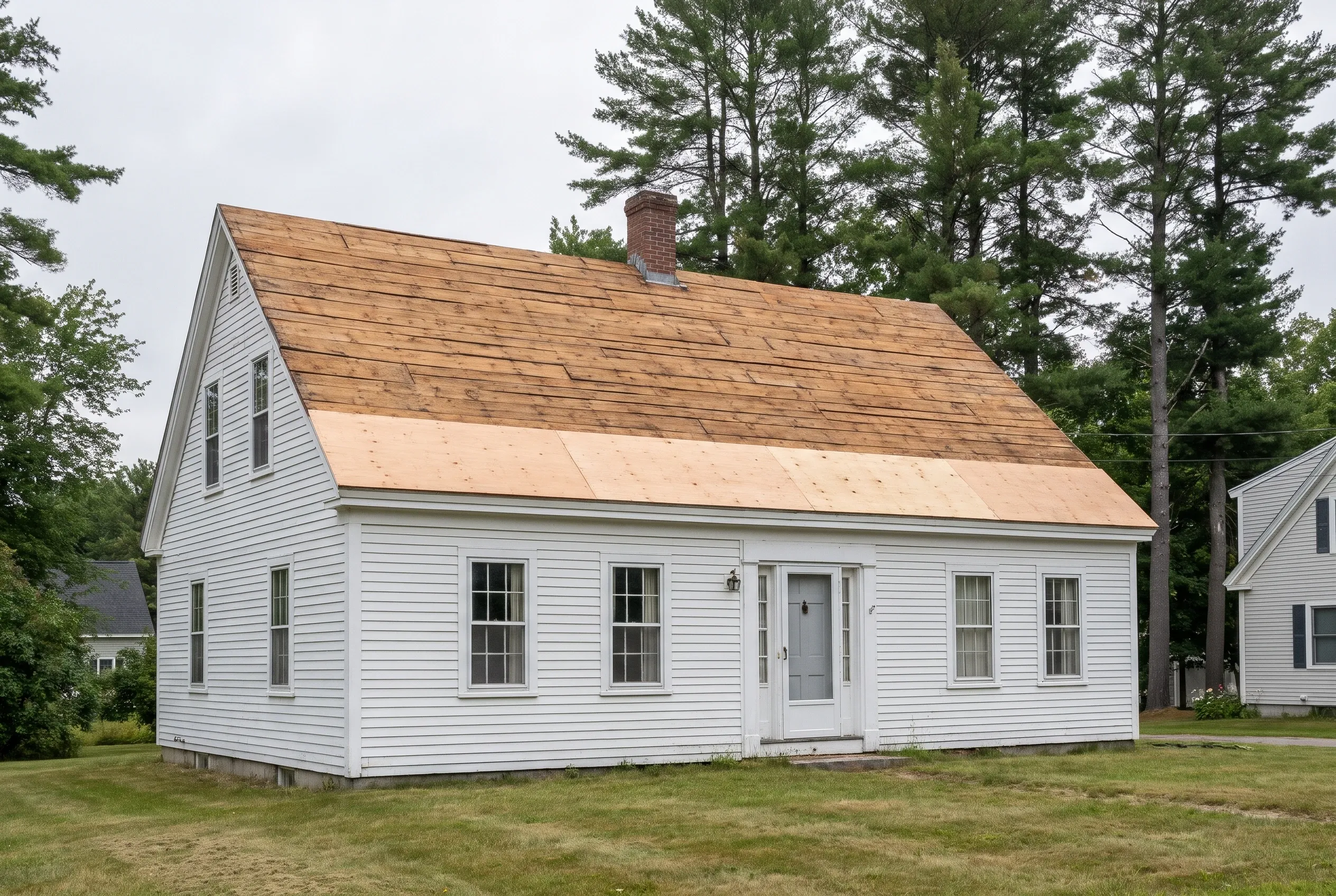
- Sheathing replacement where boards are rotted, spaced, or plank rather than plywood
- Chimney flashing rebuilt as step and counterflashing
- Skylights, replaced with the roof rather than reflashed under it
- Rafter or ridge repair where the roof has sagged
- Ventilation correction, intake at the soffit and exhaust at the ridge
Each of those should appear on your estimate as an allowance with a unit price. Unused allowance money should come back to you.
How to Compare Three Bids
Put them side by side and check five lines. Most of the difference between quotes lives here rather than in the shingle brand.
Then which flashings are new and the nail count per shingle. Ask for liability and workers' comp certificates and confirm them with the carrier.
- The ice barrier run, in feet or in courses.
- How many layers the bid assumes are coming off.
- The per-sheet sheathing price, agreed in advance.
- Which flashings are new, chimney by chimney.
- The nail count per shingle, because the manufacturer warranty depends on it.
And one thing that is not on the paper: Maine has no state licensing standard for roofers. There is no credential the state issues, which is exactly why the written scope carries all the weight here.
What you can verify is insurance. Ask for liability and workers' comp certificates and confirm them with the carrier rather than the contractor.
Common Questions
Can I roof over the existing shingles?
Physically yes. It hides a deck nobody inspected, adds weight to framing sized for one roof, and shortens the life of the shingles you just bought.
How long does a roof take?
Most Augusta houses are one to three working days. The deck should be dried in the same day it is opened.
Do I need a permit?
Usually not for a straight replacement, and usually yes once structural repair is involved. The city's code office decides.
Does insurance cover a roof replacement?
Sometimes, for storm damage rather than for age. A roof that wore out is a maintenance item, and that is the more common case here.
Get a Real Number
The bands above will tell you whether the project fits. The only way to get your number is to have somebody measure the roof and look in the attic.
- Check the bandsThey tell you whether the project fits.
- Measure the roofSomebody has to measure it in person.
- Look in the atticThat is where the deck and the venting show. Call (207) 480-7700.
Call (207) 480-7700, write [email protected], or request a free estimate. Our workmanship warranty runs 2 years and our BBB profile is A+.